Enable vSphere FT on a cluster to benefit from fault tolerance on a VM in a VMware vSphere 6.7 infrastructure
- VMware
- 07 March 2025 at 09:27 UTC
-

- 5/6

11. Test failover (without shutting down the source host)
In the case of a lab, we can afford to cut off the source host (hosting the main VM) if our "VCSA" virtual machine is not on the same host as our main VM.
But in business, if you want to test the failover of a virtual machine protected by vSphere Fault Tolerance, you can use a specific option provided by VMware.
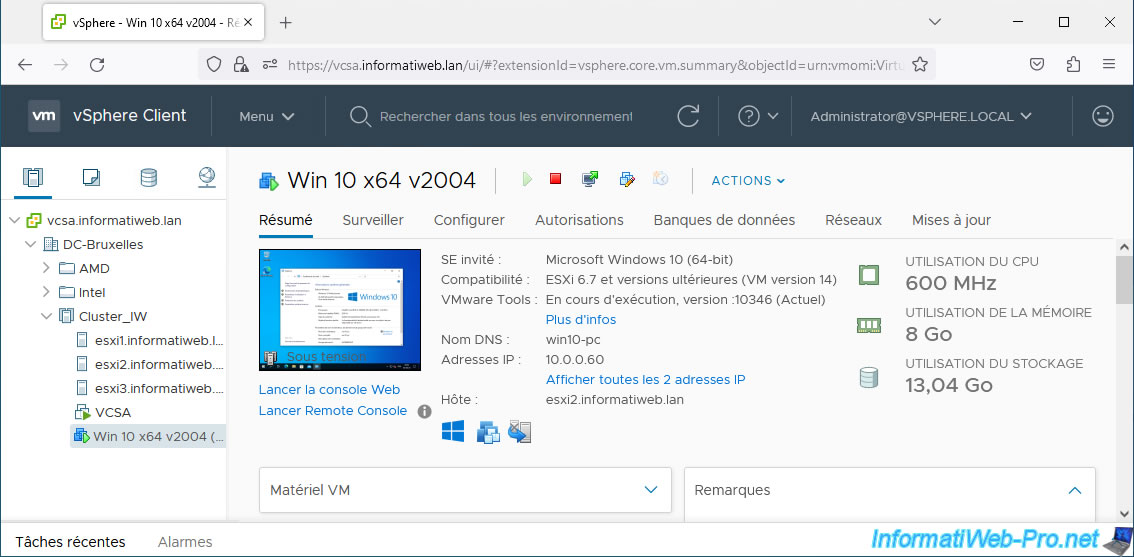
To do this, start by selecting your main virtual machine.
As you can see, in our case our main VM is currently on our host "esxi2".
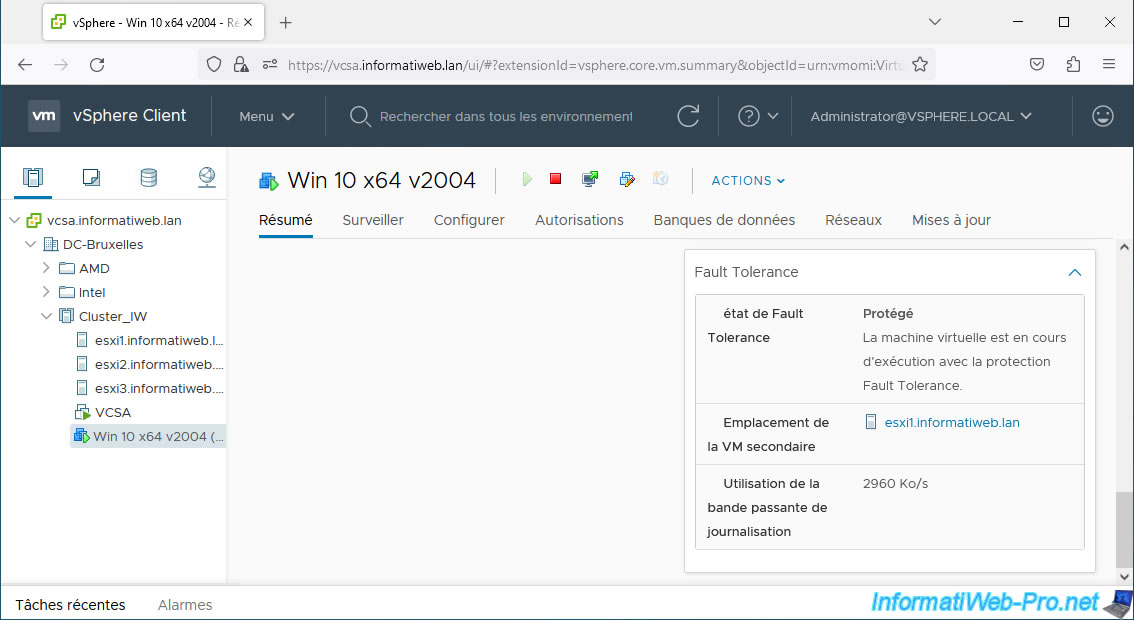
At the bottom of the page, we can see that our secondary VM is on our host "esxi1".
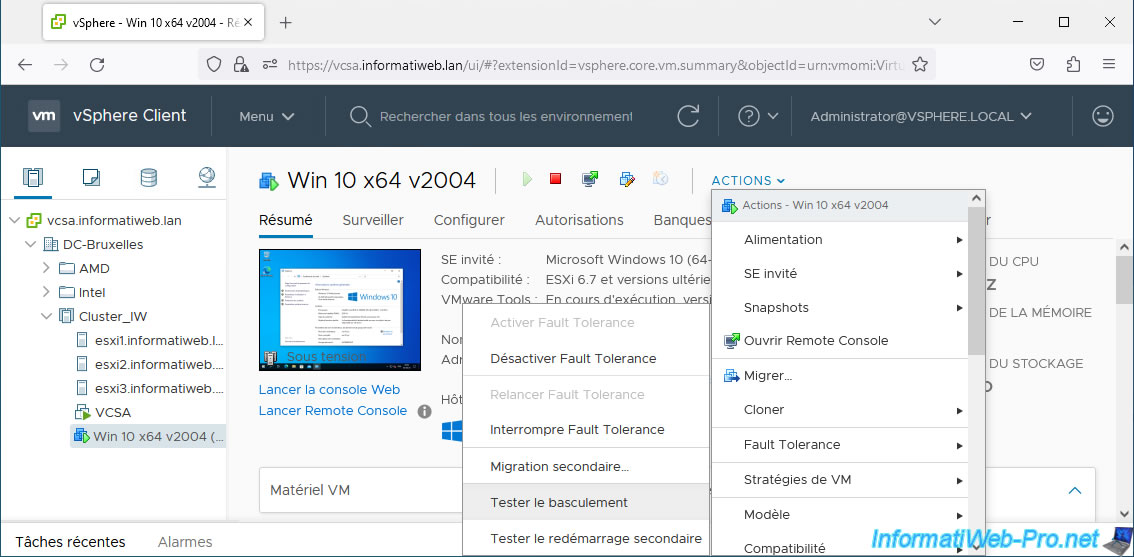
To test failover without removing power to a host, go to the "Actions" menu of your main virtual machine and click: Fault Tolerance -> Test Failover.
Source : Test Failover - VMware Docs.
A "Test Switch" task will appear in recent tasks.
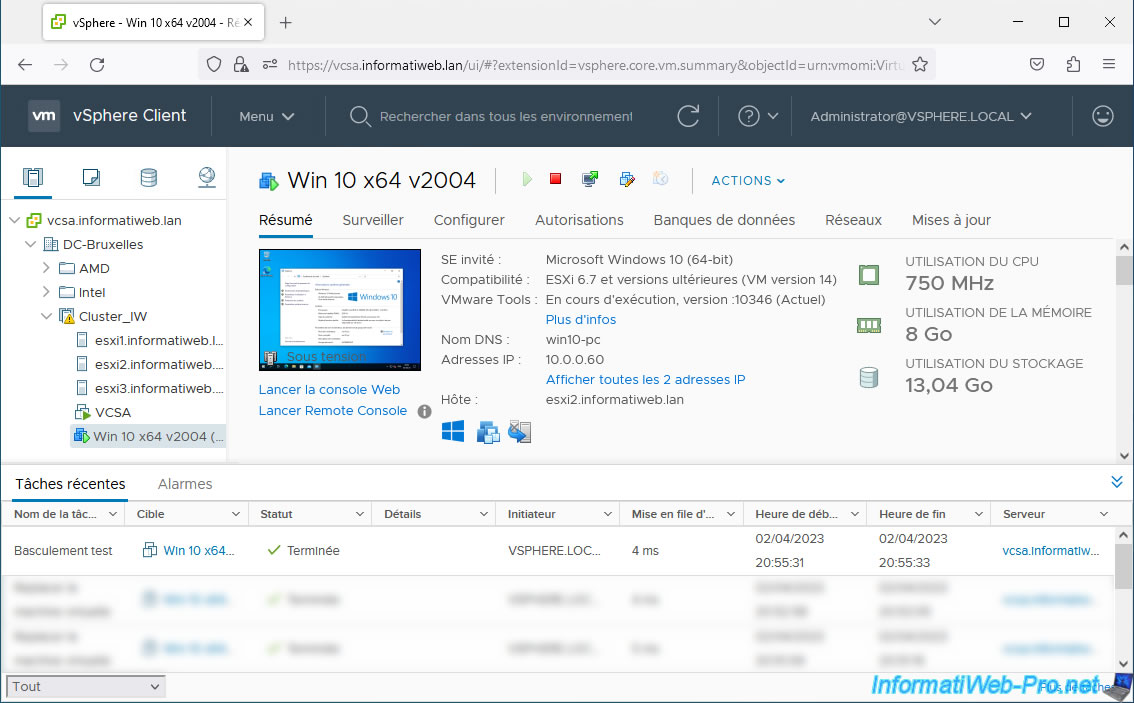
A few seconds later, an error message will appear on the page of your virtual machine which was protected by Fault Tolerance.
Plain Text
Fault Tolerance state of the virtual machine modified.
Indeed, our secondary virtual machine which was on our host "esxi1" is now running since it has become the main virtual machine.
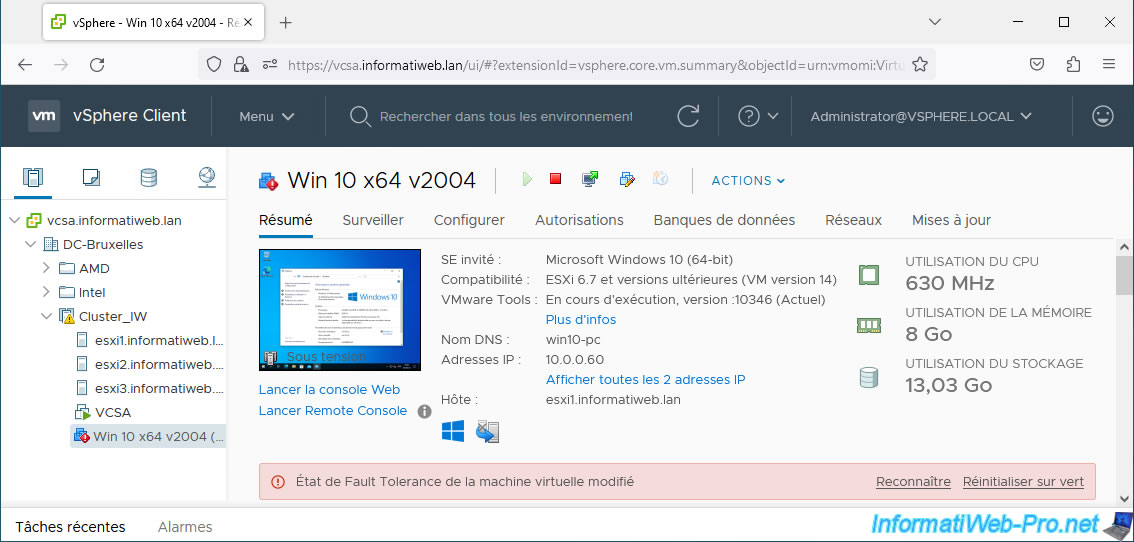
On your cluster, you will see that a vSphere HA failover is in progress.
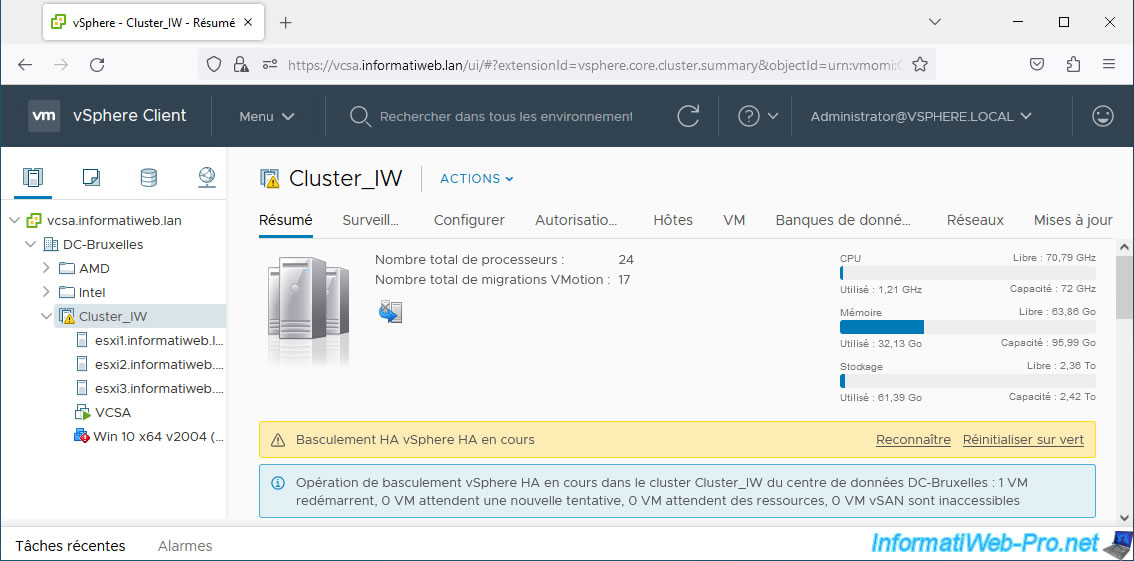
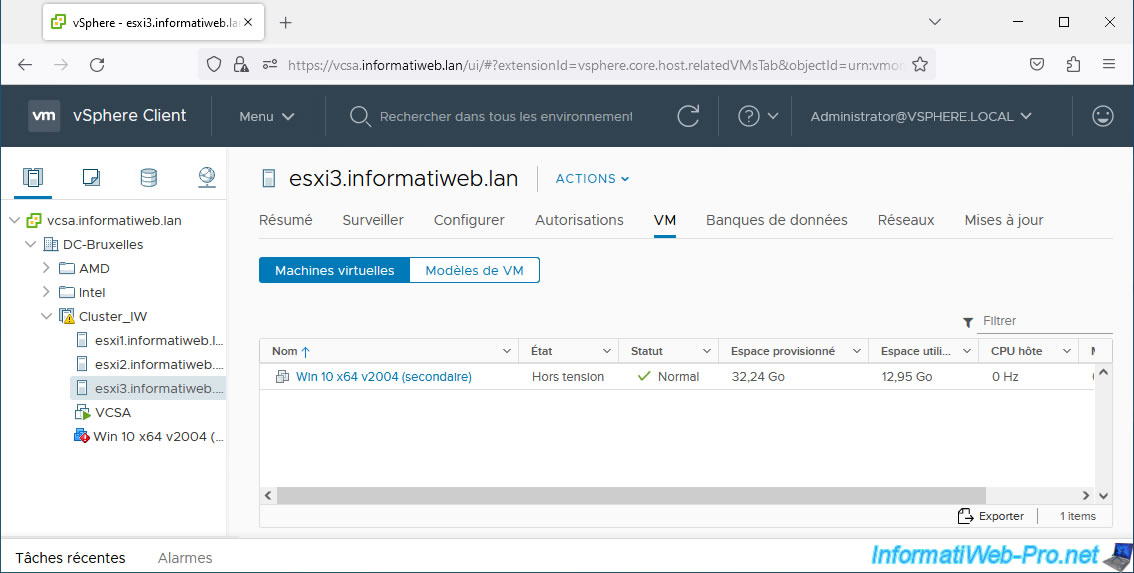
Following the failover, Fault Tolerance will create a new secondary virtual machine.
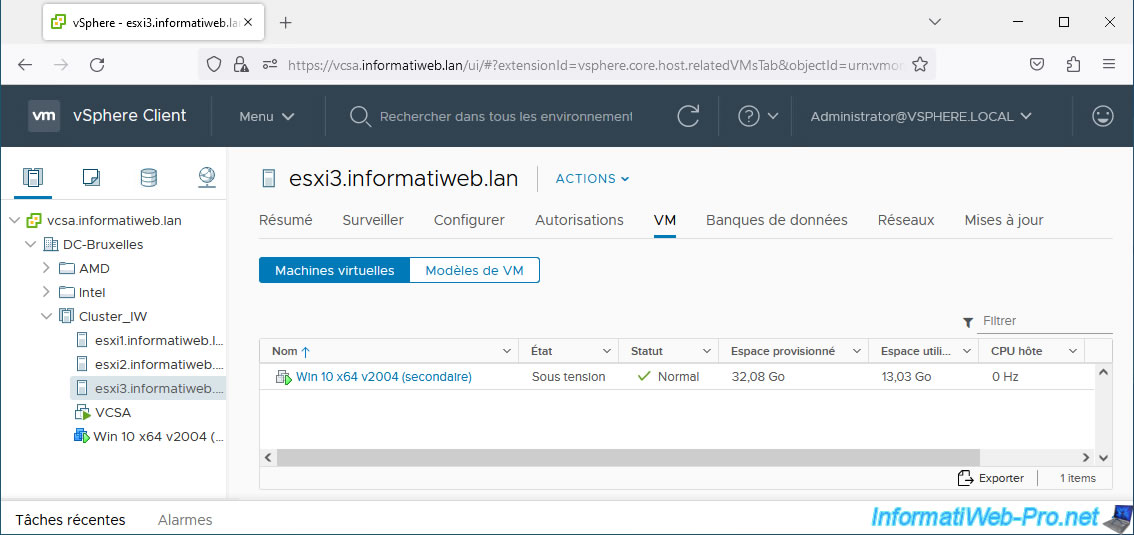
In our case, this was created on our host "esxi3".
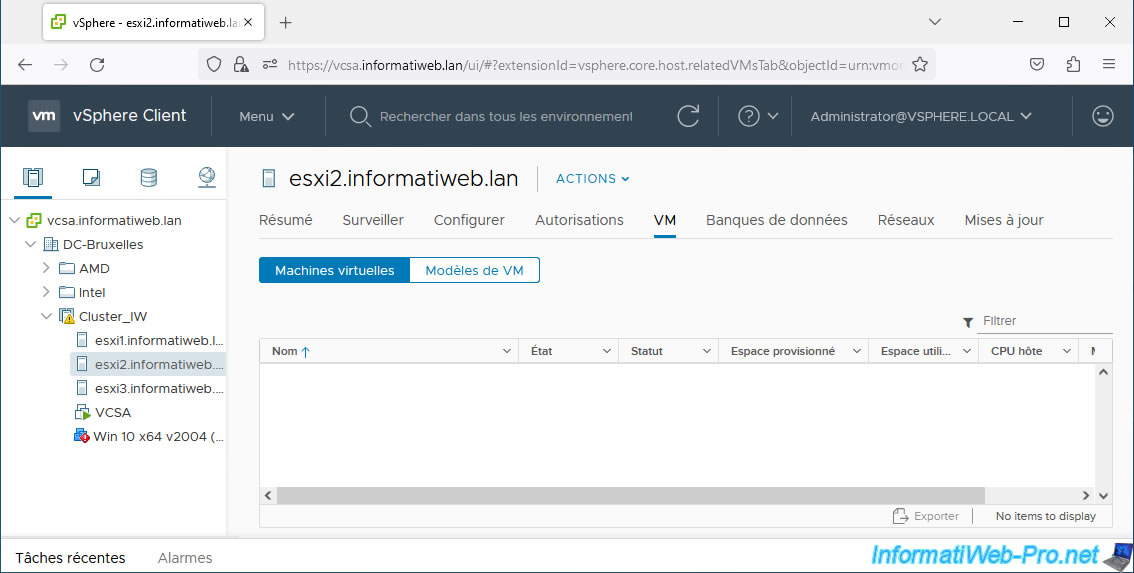
On our host "esxi2", the main virtual machine has disappeared since it is that of host "esxi1" which has become the main virtual machine.
As you can see, the virtual machine on our host "esxi1" is designated as primary.
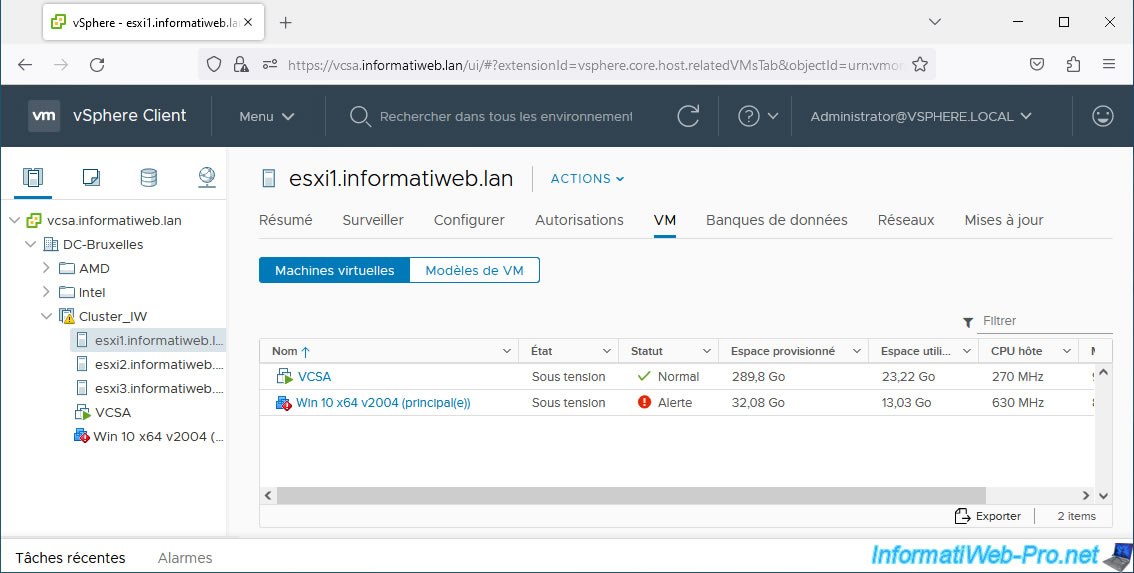
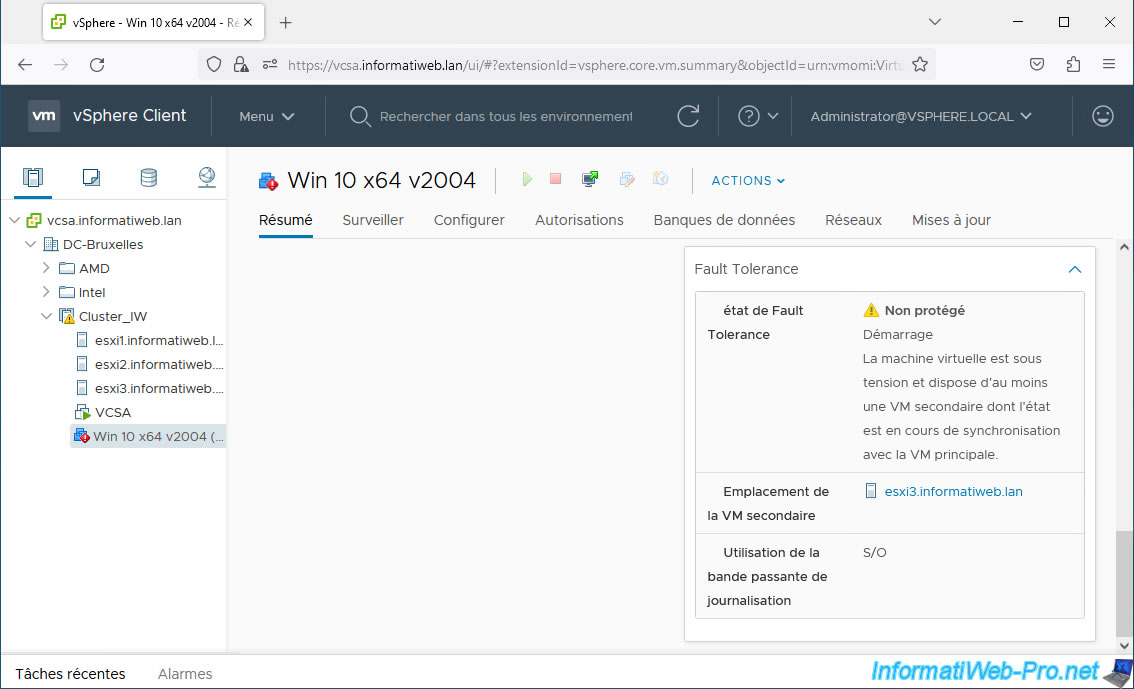
If you look at the bottom of your primary VM page, you will be able to see that the Fault Tolerance status is "Unprotected" and that a secondary VM is currently syncing with the primary VM.
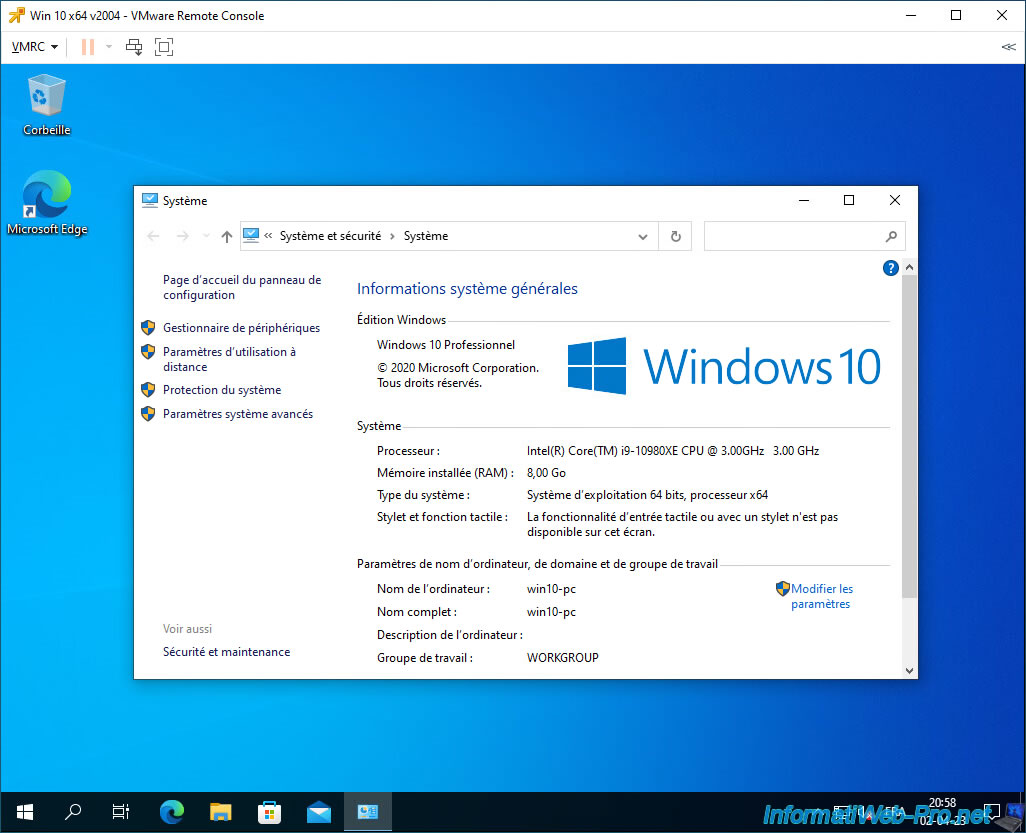
As you can see, the VM is still functional, despite a new secondary VM being synchronized from the primary VM.
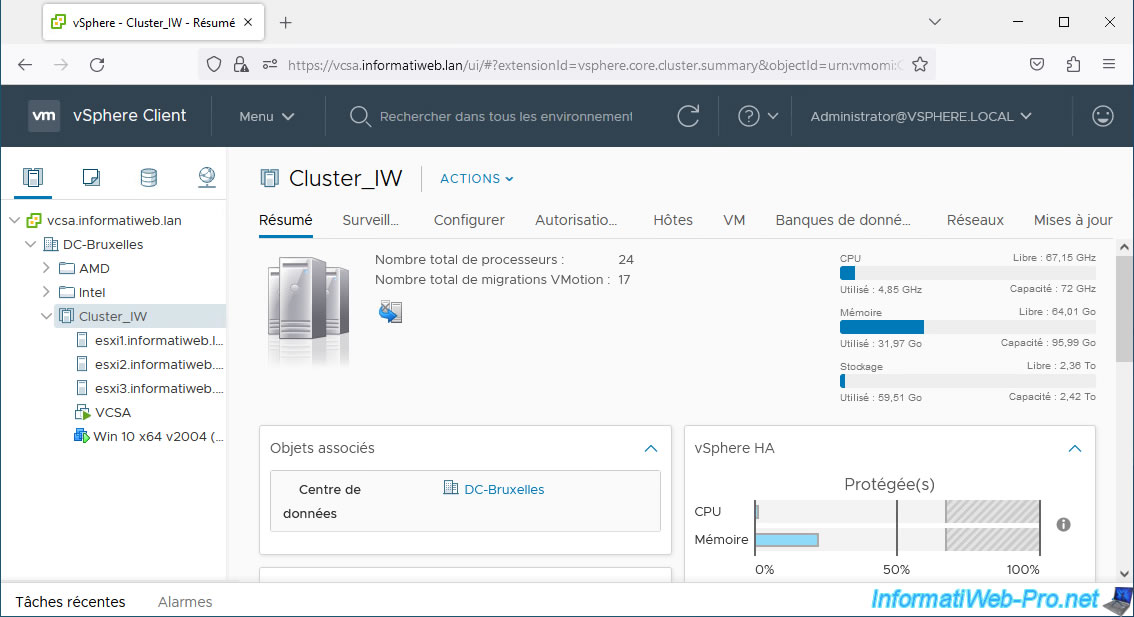
Once the synchronization is up to date, any errors and warnings will disappear and the virtual machine concerned will once again be protected by vSphere Fault Tolerance.
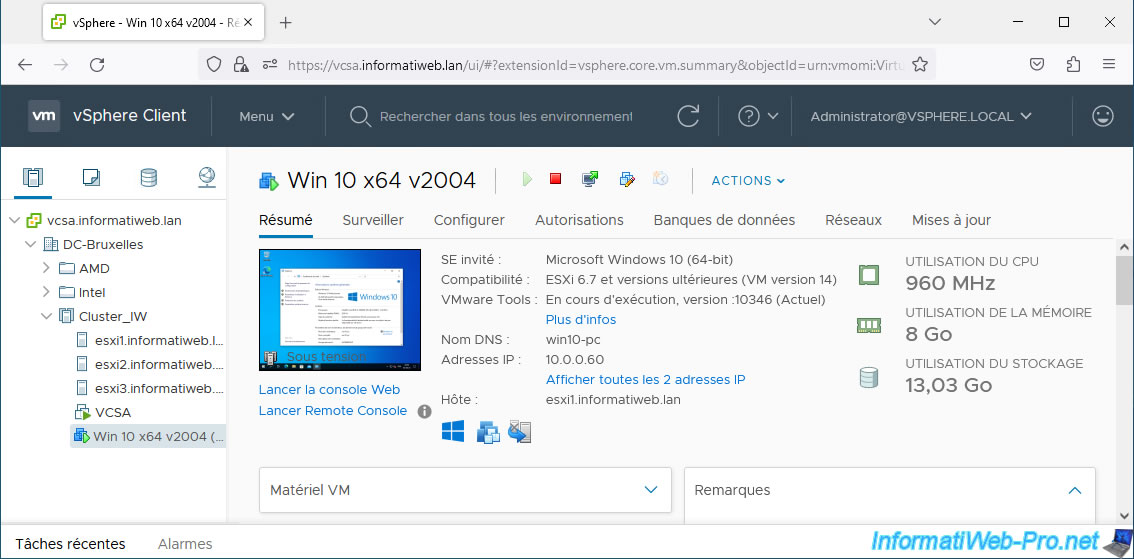
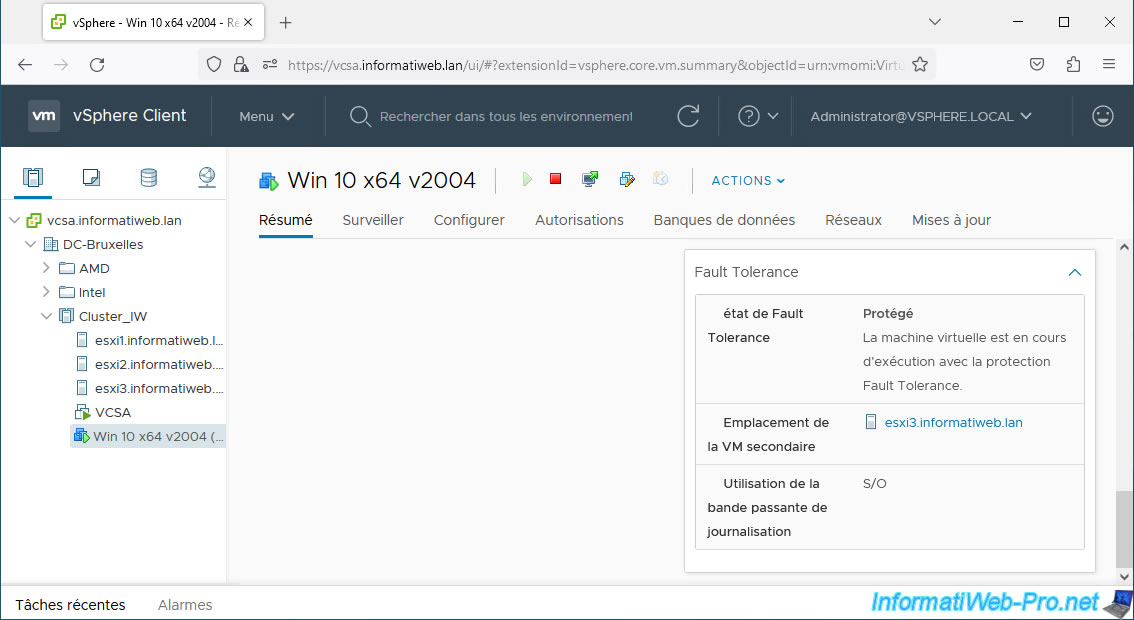
As expected, the secondary VM is "powered on" on our host "esxi3".
As expected, no errors appear on your cluster.
Share this tutorial
To see also
-
VMware 3/5/2025
VMware vSphere 6.7 - Cluster admission control
-
VMware 2/14/2025
VMware vSphere 6.7 - Create a cluster
-
VMware 2/19/2025
VMware vSphere 6.7 - Create a cluster and enable EVC mode
-
VMware 2/12/2025
VMware vSphere 6.7 - Create a datastores cluster and enable SDRS
No comment